Even “Labour Friends of Israel, which includes senior Labour MPs and peers, said it “strongly opposes” the Israeli settlements…”
‘Boycott’ fears as Andy Burnham plans to sanction Israeli settlements
The prime minister wants to take a more robust line on the issue than Sir Keir Starmer, but Labour remains divided over the practicalities
Tuesday August 25 2026
Andy Burnham is poised to announce “robust” sanctions on Israeli settlements in the West Bank despite warnings they could spiral into a “de facto boycott” of the country.
The prime minister wants to strengthen the government’s approach in response to Israeli plans to open tenders for the construction of 1,200 settler homes.
Ed Miliband, the foreign secretary, said Israel’s plans would effectively cut the West Bank in two and destroy any hope of a two-state solution.
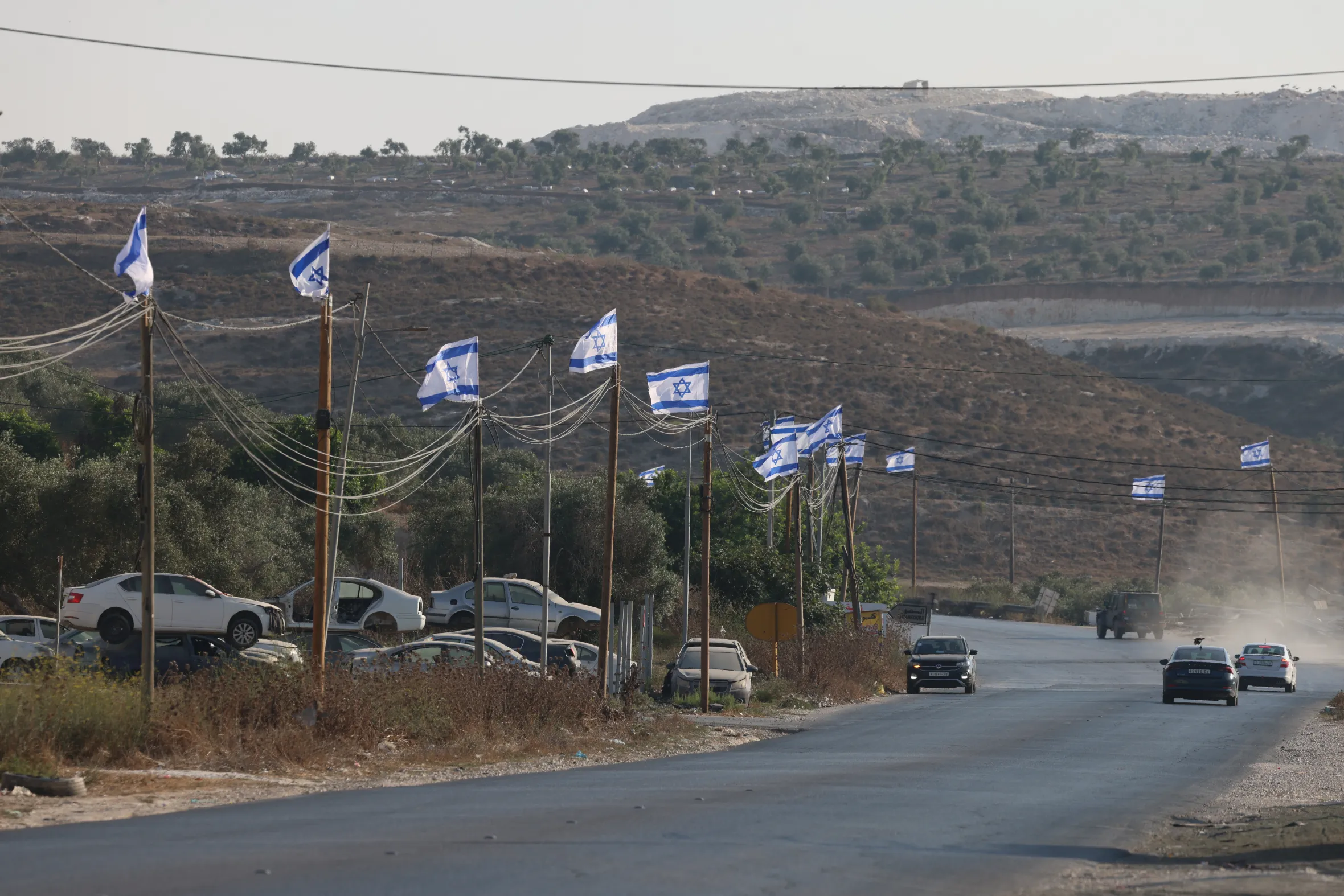
Israeli flags raised by settlers on a main road to Jenin City last weekALAA BADARNEH/EPA
A senior government source told The Times that Burnham wanted to take a far more “robust” position than his predecessor Sir Keir Starmer. The source expected him to approve plans for a trade ban on Israeli settlements and the sanctioning of individuals.
Officials have warned, however, that a ban would bring significant practical difficulties: distinguishing between goods from the settlements and goods from Israel would be challenging. They have also said that a ban on services would be impractical.
Officials also said there was a significant risk that “legitimate” Israeli businesses would be hit by the ban and that it risked undermining trade with Israel more broadly. They have also raised concerns that Palestinian businesses in occupied territories could be hit by the sanctions.
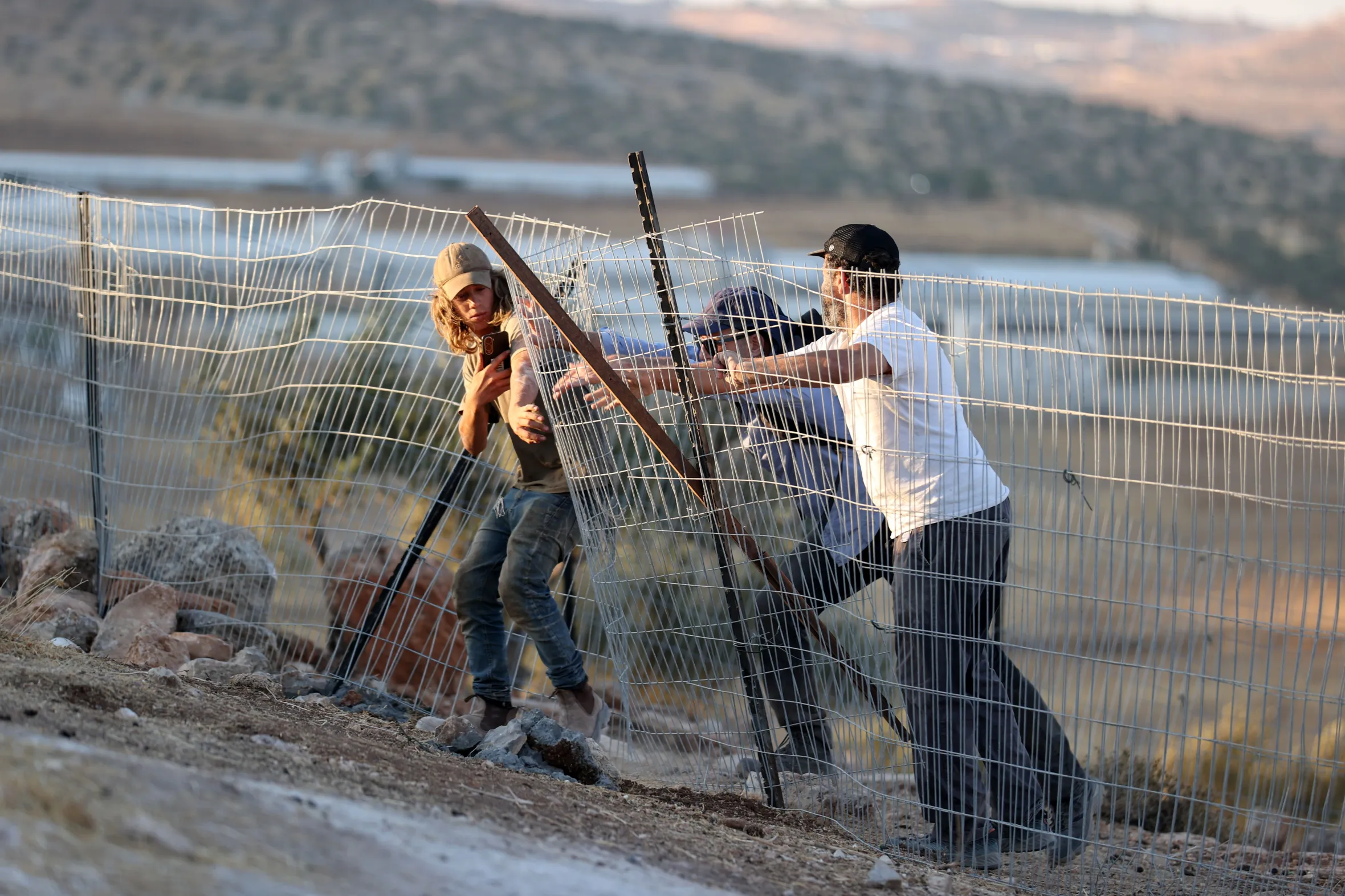
A settler raid on the Christian village of Taybeh Issam Rimawi/Anadolu via Getty Images
The issue has divided the Labour Party. More than 140 Labour MPs, equivalent to about a third of the party, signed a letter calling for the government to ban trade with Israeli settlements. Supporters of the ban are also preparing to table a motion at Labour’s conference next month.
Burnham is expected to make the announcement before then to avoid the issue overshadowing his first conference as Labour leader.
Labour Friends of Israel, which includes senior Labour MPs and peers, said it “strongly opposes” the Israeli settlements and supported “calibrated steps against extremist settlers and extremist settler groups”.
But it added: “A boycott of trade with settlements is practically impossible and will become a de facto boycott of all of Israel, which would be deeply damaging to the UK national interest, the British Jewish community and Palestinian workers.
“Moreover, with a general election on October 27, there is a real risk that untargeted action feeds the ‘siege mentality’ of the Israeli right and is thus politically damaging to Israel’s opposition, which is leading in the polls and will bring about a substantive change in direction.”
Burnham has repeatedly signalled that he wants to take a stronger approach on Israel. Shortly before he became prime minister he said: “I know that many people feel that at the start of Israel’s military action in Gaza, my party didn’t get it right, and I am sorry about that.” Burnham promised to “do better”.
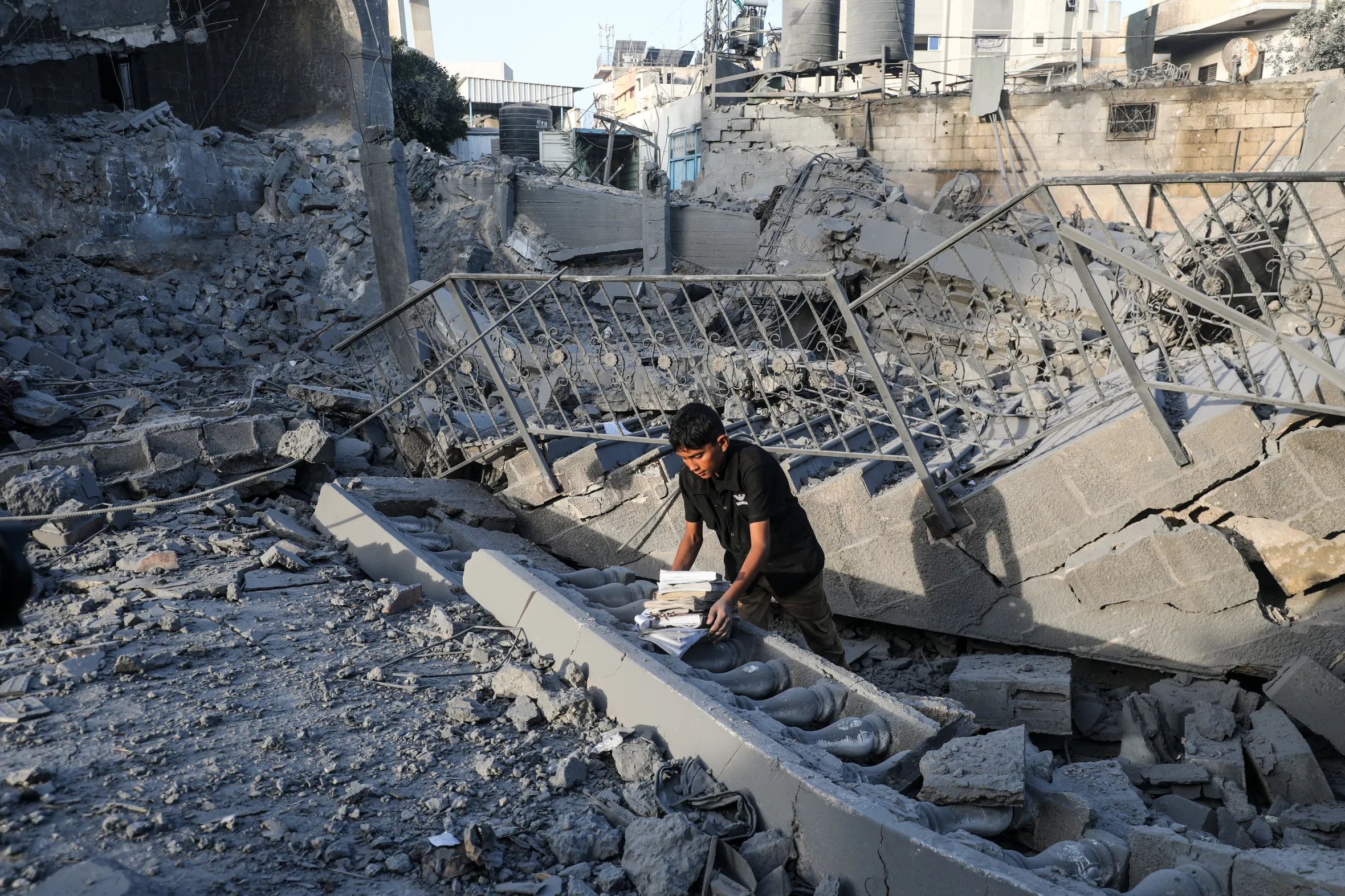
The aftermath of an Israeli airstrike on the Abu Salim mosque in Deir al-Balah, Gaza, on Tuesday. Andy Burnham has vowed to “do better” with regard to Labour’s response to Israeli military action MOIZ SALHI/ANDALOU/GETTY IMAGES
Miliband said last week that Israel’s plans, known as the E1 settlement project, constituted an “unacceptable and destructive act”.
“E1 would cut across the heart of Palestine and risks separating the West Bank from East Jerusalem, which would endanger the viability of a two-state solution,” he said. “Britain will not stand back and accept the destruction of the two-state solution.
“In the coming weeks we will set out a comprehensive set of measures to respond to Israeli government policies, protect the viability of the Palestinian state, target sanctions at those who participate in illegal settlement expansion and support a just and lasting peace for Israelis and Palestinians.”
Spain has imposed a total ban on arms sales with Israel and imports of products originating from “illegal” settlements. Advertising of such goods is also prohibited under regulations issued in September. Ireland passed legislation in July prohibiting the import of goods from Israeli settlements in occupied Palestinian territories.
These moves sparked warnings that the Trump administration, which is seen as Israel’s closest ally, could retaliate by imposing trade restrictions.
Emily Thornberry, chair of the foreign affairs select committee, said: “Now is the time to act. We can’t put it off any longer. We have to stop saying, ‘Oh, isn’t it difficult?’ and just get on with it.
“They’re about to put out tenders on the E1, which is the final piece of the jigsaw. It will cut the nation of Palestine in half and cut it away from access to Jerusalem. They are trying to get these contracts signed before the elections which they may not win. They have said they want to obliterate any chance of a Palestinian state. We have to stop it.”
Steve Yemm, the Labour MP for Mansfield, warned of “unintended consequences” from trade restrictions. While stressing that he strongly opposed the E1 development, Yemm said: “A comprehensive ban on trade and financial dealings linked to settlements would raise serious questions about enforceability, territorial definitions and unintended consequences for legitimate organisations and individuals.”
The government said: “We do not comment on speculation. The foreign secretary has been clear that illegal settlements threaten the viability of a Palestinian state and undermine security for both Israelis and Palestinians.”
Can Burnham avoid getting bogged down in Israel?
In his bloodless coup, Andy Burnham largely went out of his way to avoid explicitly criticising his predecessor, with one notable exception — the party’s position on Israel (Steven Swinford and Aubrey Allegretti write).
Shortly after entering Downing Street, he issued an apology on Labour’s behalf, saying that the party “didn’t get it right” in its initial response to Israel’s military action in Gaza.
Now in office, he is prepared to go significantly further. The Times has been told that he is poised to announce a trade ban within weeks on illegal Israeli settlements in the West Bank.
The issue divides Labour and officials have raised concerns about the practical difficulties. It is likely to be one of Burnham’s most significant announcements on foreign policy and would provoke a backlash from both Israel and the US.
More broadly, pressure has been applied on organisations and businesses to avoid using Israeli-made goods in protest at the country’s occupation of land claimed by Palestinians.
The Boycott, Divestment and Sanctions (BDS) movement was inspired by the 1980s campaign of economic and cultural boycotts against apartheid South Africa, and has been backed by trade unions and student groups. Some councils have also passed motions in support of BDS-aligned goals, particularly focusing on pension funds with investments in companies linked to West Bank settlements.
In 2020, during President Trump’s first administration, Mike Pompeo, his secretary of state, called the campaign “a cancer” and “a manifestation of antisemitism”.
Israel claims the BDS campaign is motivated by antisemitism.
Plans under the Conservative government to ban public bodies from imposing boycotts or sanctions on foreign countries were halted abruptly in 2024 when the general election was called.
Burnham will have to navigate these criticisms carefully. Whichever way he turns, it is likely to be a hugely contentious decision.